Thursday, July 22, 2010

Counter Punch - July 20


Inside the Israeli Knesset

By URI AVNERY


WHEN I was first elected to the Knesset, I was appalled at what I found. I discovered that, with rare exceptions, the intellectual level of the debates was close to zero. They consisted mainly of strings of clichés of the most commonplace variety. During most of the debates, the plenum was almost empty. Most participants spoke vulgar Hebrew. When voting, many members had no idea what they were voting for or against, they just followed the party whip.

That was 1967, when the Knesset included members like Levy Eshkol and Pinchas Sapir, David Ben-Gurion and Moshe Dayan, Menachem Begin and Yohanan Bader,  Meir Yaari and Yaakov Chazan, for whom today's streets, highroads and neighborhoods are named.

In comparison to the present Knesset, that Knesset now looks like Plato’s Academy.
* * *
WHAT FRIGHTENED me more than anything else was the readiness of members to enact irresponsible laws for the sake of fleeting popularity, especially at times of mass hysteria. One of my first Knesset initiatives was to submit a bill which would have created a second chamber, a kind of Senate, composed of outstanding personalities, with the power to hold up the enactment of new laws and compel the Knesset to reconsider them after an interval. This, I hoped, would prevent laws being hastily adopted in an atmosphere of excitement.

The bill was not considered seriously, neither by the Knesset nor by the general public. The Knesset almost unanimously voted it down. (After some years, several of the members told me that they regretted their vote.)  The newspapers nicknamed the proposed chamber “the House of Lords” and ridiculed it. Haaretz devoted a whole page of cartoons to the proposal, depicting me in the garb of a British peer.

So there is no brake. The production of irresponsible laws, most of them racist and anti-democratic, is booming. The more the government itself is turning into an assembly of political hacks, the more the likelihood of its preventing such legislation is diminishing. The present government, the largest, basest and most despised in Israel’s history, is cooperating with the Knesset members who submit such bills, and even initiating them itself.

The only remaining obstacle to this recklessness is the Supreme Court. In the absence of a written constitution, it has taken upon itself the power to annul scandalous laws that violate democracy and human rights. But the Supreme Court itself is beleaguered by rightists who want to destroy it, and is moving with great caution. It intervenes only in the most extreme cases.

Thus a paradoxical situation has arisen: parliament, the highest expression of democracy, is itself now posing a dire threat to Israeli democracy.  
* * *
THE MAN who personifies this phenomenon more than anyone else is MK Michael Ben-Ari of the “National Union” faction, the heir of Meir Kahane, whose organization “Kach” (“Thus”) was outlawed many years ago because of its openly fascist character.

Kahane himself was elected to the Knesset only once. The reaction of the other members was unequivocal: whenever he rose to speak, almost all the other members left the hall. The rabbi had to make his speeches before a handful of ultra-right colleagues.

A few weeks ago I visited the present Knesset for the first time since its election. I went there to listen to a debate about a subject that concerns me too: the decision of the Palestinian Authority to boycott the products of the settlements, a dozen years after Gush Shalom started this boycott. I spent some hours in the building, and from hour to hour my revulsion deepened.

The main cause was a circumstance I had not been aware of: MK Ben-Ari, the disciple and admirer of Kahane, holds sway there. Not only is he not an isolated outsider on the fringe of parliamentary life, as his mentor had been, but on the contrary, he is at the center. I saw the members of almost all other factions crowding around him in the members’ cafeteria and listening to his perorations with rapt attention in the plenum. No doubt can remain that Kahanism – the Israeli version of fascism – has moved from the margin to center stage.

* * *
Recently, the country witnessed a scene that looked like something from the parliament of South Korea or Japan.

On the Knesset speaker’s rostrum stood MK Haneen Zoabi of the Arab nationalist Balad faction and tried to explain why she had joined the Gaza aid flotilla that had been attacked by the Israeli navy. MK Anastasia Michaeli, a member of the Lieberman party, jumped from her seat and rushed to the rostrum, letting out blood-curdling shrieks, waving her arms, in order to remove Haneen Zoabi by force. Other members rose from their seats to help Michaeli. Near the speaker, a threatening crowd of Knesset members gathered. Only with great difficulty did the ushers succeed in saving Zoabi from bodily harm. One of the male members shouted at her, in a typical mixture of racism and sexism: “Go to Gaza and see what they will do to a 41 year old unmarried woman!”
One could not imagine a greater contrast than that between the two MKs. While Haneen Zoabi belongs to a family whose roots in the Nazareth area go back centuries, perhaps to the time of Jesus, Anastasia Michaeli was born in (then) Leningrad. She was elected “Miss St. Petersburg” and then became a fashion model, married an Israeli, converted to Judaism, immigrated to Israel at age 24 but sticks to her very Russian first name. She has given birth to eight children. She may be a candidate for the Israeli Sarah Palin, who, after all, was also once a beauty queen..

As far as I could make out, not a single Jewish member raised a finger to defend Zoabi during the tumult. Nothing but some half-hearted protest from the Speaker, Reuven Rivlin, and a Meretz member, Chaim Oron.

In all the 61 years of its existence, the Knesset had not seen such a sight. Within a minute the sovereign assembly turned into a parliamentary lynch mob.

One does not have to support the ideology of Balad to respect the impressive personality of Haneen Zoabi. She speaks fluently and persuasively, has degrees from two Israeli universities, fights for the rights of women within the Israeli-Arab community and is the first female member of an Arab party in the Knesset. Israeli democracy could be proud of her. She belongs to a large Arab extended family. The brother of her grandfather was the mayor of Nazareth, one uncle was a deputy minister and another a Supreme Court judge. (Indeed, on my first day in the Knesset I proposed that another member of the Zoabi family be elected as Speaker.)

This week, the Knesset decided by a large majority to adopt a proposal by Michael Ben-Ari, supported by Likud and Kadima members, to strip Haneen Zoabi of her parliamentary privileges. Even before, Interior Minister Eli Yishai had asked the Legal Advisor to the Government for approval of his plan to strip Zoabi of her Israeli citizenship on the grounds of treason. One of the Knesset members shouted at her: “You have no place in the Israeli Knesset! You have no right to hold an Israeli identity card!”

On the very same day, the Knesset took action against the founder of Zoabi’s party, Azmi Bishara. In a preliminary hearing, it approved a bill – this one, too, supported by both Likud and Kadima members – aimed at denying Bishara his pension, which is due after his resignation from the Knesset. (He is staying abroad, after being threatened with an indictment for espionage.)
The proud parents of these initiatives, which enjoy massive support from Likud, Kadima, Lieberman’s party and all the religious factions, do not hide their intention to expel all the Arabs from parliament and establish at long last a pure Jewish Knesset. The latest decisions of the Knesset are but parts of a prolonged campaign, which gives birth almost every week to new initiatives from publicity-hungry members, who know that the more racist and anti-democratic their bills are, the more popular they will be with their electorate.
Such was this weeks Knesset decision to condition the acquisition of citizenship on the candidate’s swearing allegiance to Israel as a “Jewish and democratic state”, thus demanding that Arabs (especially foreign Arab spouses of Arab citizens) subscribe to the Zionist ideology. The equivalent would be the demand that new American citizens swear allegiance to the USA as a “white Anglo-Saxon protestant state”. 

There seems to be no limit to this parliamentary irresponsibility. All red lines have been crossed long ago. This does not concern only the parliamentary representation of more than 20% of Israel’s citizens, but there is a growing tendency towards depriving all Arab citizens of their citizenship altogether.   
* * *
THIS TENDENCY is connected with the ongoing attack on the status of the Arabs in East Jerusalem.

This week I was present at the hearing in Jerusalem’s magistrates court on the detention of Muhammed Abu Ter, one of the four Hamas members of the Palestinian parliament from Jerusalem. The hearing was held in a tiny room, which can seat only about a dozen spectators. I succeeded only with great difficulty in getting in.

After they were elected in democratic elections, in conformity with Israel’s explicit obligation under the Oslo agreement to allow the Arabs in East Jerusalem to take part, the government announced that their “permanent resident” status had been revoked.

What does that mean? When Israel “annexed” East Jerusalem in 1967, the government did not dream of conferring citizenship on the inhabitants, which would have significantly increased the percentage of Arab voters in Israel. Neither did they invent a new status for them. Lacking other alternatives, the inhabitants became “permanent residents”, a status devised for foreigners who wish to stay in Israel. The Minister of the Interior has the right to revoke this status and deport such people to their countries of origin.

Clearly, this definition of “permanent residents” should not apply to the inhabitants of East Jerusalem. They and their forefathers were born there, they have no other citizenship and no other place of residence. The revoking of their status turns them into politically homeless people without protection of any kind.

The state lawyers argued in court that with the cancellation of his “permanent resident” status, Abu Ter has become an “illegal person” whose refusal to leave the city warrants unlimited detention.

(A few hours earlier, the Supreme Court dealt with our petition concerning the investigation of the Gaza flotilla incident. We won a partial, but significant, victory: for the first time in its history, the Supreme Court agreed to interfere in a matter concerning a commission of inquiry. The court decided that if the commission requires the testimony of military officers and the government tries to prevent this, the court will intervene.)
* * *
IF SOME people are trying to delude themselves into believing that the parliamentary mob will harm “only Arabs”, they are vastly mistaken. The only question is: who is next in line?

This week, the Knesset gave the first reading to a bill to impose heavy penalties on any Israeli who advocates a boycott on Israel, in general, and on economic enterprises, universities and other Israeli institutions, including settlements, in particular. Any such institution will be entitled to an indemnity of 5000 dollars from every supporter of the boycott.

A call for boycott is a democratic means of expression. I object very much to a general boycott on Israel, but (following Voltaire) am ready to fight for everybody’s right to call for such a boycott. The real aim of the bill is, of course, to protect the settlements: it is designed to deter those who call for a boycott of the products of the settlements which exist on occupied land outside the borders of the state. This includes me and my friends.

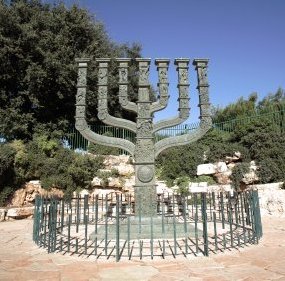
Since the foundation of Israel, it has never stopped boasting of being the “Only Democracy in the Middle East”. This is the jewel in the crown of Israeli propaganda. The Knesset is the symbol of this democracy.

It seems that the parliamentary mob, which has taken over the Knesset, is determined to destroy this image once and for all, so that Israel will find its proper place somewhere between Libya, Yemen and Saudi Arabia.


Uri Avnery is an Israeli writer and peace activist with Gush Shalom. He is a contributor to CounterPunch's book The Politics of Anti-Semitism.


Source : http://www.counterpunch.com/avnery07202010.html


The American - July 17

No Butz About It


How a long-ago Secretary of Agriculture became the demon of industrial food critics; and how those critics get the last half-century of agricultural history wrong.

First Lady Michelle Obama has refused to plant corn in her famous White House organic garden. That's a direct result of the attack on corn and modern agriculture, led by local and sustainable food advocates, small farm groups, food writers, and the producers of film documentaries. The only kind of corn that would be grown in any garden, organic or not, is sweet corn, and sweet corn is the only thing that makes July survivable in hot Midwestern summers, but never mind. The organic garden is a political exercise, and corn is in bad odor with environmentalists, the New York Times, and Michael Pollan.
According to the narrative, we farmers plant far too much corn; in particular, too much of the kind of corn livestock eat. And we do this even though corn is really cheap.
What’s more, corn has become an industrial product like polypropylene or stainless steel; it's no longer really food for any creature, great or small. Corn sweetener receives more bad press than methamphetamine, so the Obamas will eat no fresh sweet corn dripping with butter and sprinkled with salt. (President Obama can seem peevish at times; I'd prescribe sweet corn, twice a day, for the week or so that corn from the garden is at its peak.)
Earl Butz was often wrong, but he was right about one thing: our long experiment with controlling production has invited competitors to take up the slack.

The fact that the Obamas are denying themselves a summer treat would be of little concern, except there are other problems with this story. The first is that it doesn't reflect well on farmers. If we keep planting corn every year even though it never reaches profitable prices, then we farmers are stupid. Even at the risk of appearing irrational, farmers rarely challenge the story. It serves us well to argue from poverty when farm bills are written and subsidy levels decided, when stories appear about the subsidies received by farmers, and when we negotiate with the guy down at John Deere or with the landowner whose farm we want to rent.
Because the agenda of corn's critics is advanced if farmers buy into the story, it doesn't serve their ends to paint farmers as idiots. A scapegoat is needed. Hence, farmers plant too much corn because… because… because Earl Butz told us to!
Children of the Corn
Butz, for those who don't remember, was Secretary of Agriculture for Presidents Nixon and Ford. He famously told farmers to plant "fence row to fence row.” He was no fan of acreage retirement programs: these programs were the main tool in the farm policy toolbox for 60 years, designed to control crop supply to keep prices stable, thus helping us farmers. And he was an ardent advocate for farm exports. He lost his job in 1976 after telling a racial joke.
In the 2007 documentary “King Corn,” Ian Cheney and Curt Ellis interview an aged Butz, and describe how, in their view, Nixon-era farm policies led directly to overproduction of corn and a subsequent rise of obesity in the United States. On camera, Butz is unrepentant, still convinced that paying farmers not to plant was "the stupidest thing we ever did." The former secretary is proud of the fact that food costs have plummeted as a percentage of the average American's budget, and reminds Cheney and Ellis that Americans are wealthier today because food costs have declined.
According to the narrative, we farmers plant far too much corn, in particular too much of the kind of corn livestock eats.

Greg Critser, in his book Fat Land: How Americans Became the Fattest People in the World, blames Butz for the use of high fructose corn sweetener, which, according to Critser, has made Americans obese. Richard Manning, in his 2004 screed Against the Grain: How Agriculture has Hijacked Civilization, claims Butz is responsible for large corn crops and low corn prices.
Farmer Tom Philpott, writing on the occasion of Butz's death, perhaps best describes the conventional wisdom. According to Philpott, Butz presided over massive cuts in farm subsidies, and more importantly the end of land retirement schemes used to control supply. Philpott describes farm policy from the 1930s until Butz as a sort of Nirvana for both farmers and consumers, as it paid farmers not to farm and kept corn prices high. Butz attempted to end land retirement programs and worked to increase farm exports. This, according to the narrative, was done at the behest of large agribusiness, and led to cheap corn fed to cattle, confined animal operations, corn sweetener in soda pop, and the decline of the small family farmer.
Obviously, farmers produce less when the government pays them not to produce. But most of the criticism of Butz centers on that famous bit of cheerleading. Farmers some 40 years later are producing too much corn, leaving corn prices too cheap and Americans too fat, because Butz urged us to plant fence row to fence row, and told us to “get big or get out." Butz proclaimed as oracle, and farmers as easily led.
In a recent piece in the New York Review of Books, Pollan credits Butz with single-handedly increasing corn yields:
Agriculture Secretary Earl Butz shifted the historical focus of federal farm policy from supporting prices for farmers to boosting yields of a small handful of commodity crops (corn and soy especially) at any cost. The administration’s cheap food policy worked almost too well: crop prices fell, forcing farmers to produce still more simply to break even.
Pollan is describing a backward-bending supply curve; Butz, a Purdue University-trained economist, is rolling over in his grave.
The Price Is Right
The problem with the story is that it bears almost no relation to the truth. The critics of conventional agriculture are not fans of increased yields, of course, and blame farmers' productivity for ills ranging from diabetes to wars. How Butz is responsible for those increased yields is never made clear. Farmers now have better seeds, better machinery, and better means of controlling pests than they did in 1970. All of these things have been a blessing for mankind, and none of them results from anything Butz did.
Farmers respond to economic signals, and planted more corn in the early 1970s because prices were high, the highest they have ever been, in fact, with inflation-adjusted prices some three times today's level and double the levels of 2007 and 2008. In 1973, we purchased a tractor, our first tractor with a cab, air conditioner, and a radio, with the revenue from approximately 4,000 bushels of corn. A comparable tractor today would take the revenue from 40,000 bushels of corn.
Corn sweetener receives more bad press than methamphetamine, so no fresh sweet corn dripping with butter and sprinkled with salt will be eaten by the Obama family.

Butz was popular with many farmers, but a speech from some U.S. Department of Agriculture politician in Washington was not the reason that our farm, and thousands of farms like ours, plowed up the pasture and planted it to corn. We did it because prices were high, so high that farmers saw income levels never seen before or since. (Incidentally, it’s also a given in this Butz-driven criticism that we're planting more ground to corn than ever before. In the last few years, American farmers have typically planted about 85 million acres to corn. In 1931, American farmers planted 109 million acres of corn.)
That's not the only problem with the narrative. Acreage retirement programs were small in the early 1970s, but by the middle-1980s we had the biggest land retirement program in history, the infamous payment-in-kind (PIK) program, which saw 50 percent of the Corn Belt idle. Land retirement held on for the next decade, ending only with the 1995 Farm Bill, a whole generation after Butz left office. We continue to have 35 million acres or so of farmland enrolled in the Conservation Reserve Program. We still aren't planting fence row to fence row, even after all these years.
We can't even blame corn sweetener in soda pop on Butz. Sugar import quotas, which had been in place since the early 1800s, were repealed by the Nixon administration. They were reimposed in the early 1980s, which increased the price of sugar, made high fructose corn syrup cheaper than sugar, and led to the widespread substitution of corn sweetener for sugar.
Living in a Global Market
After leaving office, Butz was convicted of tax evasion for failing to report income. By now, he would be forgotten by almost everybody, if his bigotry and dishonesty hadn't made him such a perfect foil for the just-so stories told by the opponents of industrial agriculture. If there had been no Earl Butz, the organic and sustainable food movement would have had to invent him. Caricatured as careless of the environment, seeing large-scale agriculture as morally neutral, and totally oblivious to the niceties of political correctness, Butz epitomizes everything seen as immoral in the present food system. Even his name lends itself to ridicule.
But, for all his faults, Butz realized that we were and are in a global market.
Former Agriculture Secretary Butz was unrepentant, still convinced that paying farmers not to plant was ‘the stupidest thing we ever did.’

In the time since Butz left office, South American soybean production has increased from near zero to a level equal to U.S. production. The South Americans have quadrupled production since the early 1980s. Without touching the rainforests, Brazil can and will increase land devoted to the production of corn, soybeans, and wheat.
China and India rapidly increased food production in the decades since Butz left office, and are investing in farm land outside their borders to help guarantee adequate food for their growing populations. It won't be enough, and both countries will grow as markets for imports of food.
The Black Sea area of Eastern Europe is growing rapidly in grain production and has the potential to increase both yields and land under production; biotechnology and commercial fertilizers offer great promise for increasing grain production in Africa.
It might be better in the long run to end farm programs altogether, rather than have the U.S. taxpayer support the income of every farmer everywhere.

The U.S. Department of Agriculture estimates that gross domestic product outside the United States will increase by $40 trillion in the next 20 years. Income elasticity for food purchases outside the United States is 0.57, meaning more than half of all increased income is spent on food. Americans spend about a trillion dollars a year on food. This means the world will add a market the size of the U.S. domestic market each year for the next 20.
World food demand is projected to double in the next 50 years. The rest of the world is scrambling to meet that demand, but too many in the United States pine for the days when government policy took millions of acres of the most productive farmland in the world out of production.
Butz was often wrong, but he was right about one thing: our long experiment with controlling production has invited competitors to take up the slack. It is no coincidence that the growth in South American production occurred at the same time that we in the United States were retiring land.
Agriculture is a global industry, people are hungry, and if we in the United States turn down markets, either through misguided government programs or a whole-scale rejection of modern methods, our farms and farmers will be replaced by producers in South American, Africa, and Eastern Europe.
Blake Hurst is a Missouri farmer.

The Bangladesh Today - July 21

Killing of Policemen

Three police personnel were gunned down by extremists at remote char area in Bera upazila in Pabna on Tuesday. The victims are ASI Kafiluddin, Nayek Wahed and Constable Shafique of Dhalar Char police camp, about 75km east of Pabna town. Locals said the police personnel in civil dress went for marketing in Rajdhardia Bazaar of Masundia union in the evening.

According to a national daily, the superintendent of police in Pabna said a gang opened fire on the three plainclothes policemen who were returning to their camp. The motive behind the attack could not be known immediately. Police suspect the gunmen are members of an outlawed group. Police launched a combing-operation in the area infested by different outlawed groups from Pabna, Manikganj and Rajbari. In a similar attack in 2001, outlawed party operatives killed a sub-inspector at Dhalarchar. Later, a police camp was set up there. Operatives of different outlawed groups take shelter at Daspara after committing crimes in the adjoining areas, police said.

Meanwhile, State Minister for Home Affairs, Shamsul Haque Tuku on Wednesday deplored the killing of the police personnel in Pabna and hoped that such incident would not take place in future. He said the persons responsible for the killings of the policemen must be arrested and brought to justice. Tuku asked the law enforcers to deal with the extremists with a heavy hand.

The killing of the police personnel in Pabna is very sad and alarming. As is known to all, the extremis had been active in different areas of the southern and western parts of the country for a long time.

However, consequent upon the massive drives by police the activists of the extremists had reduced. But the Tuesday's killing of police personnel showed that the extremists are still very active. This incident also raises the fear that the extremists may try to create anarchy and political instability in the country. Against this backdrop, the administration and police should be alert and active. After all unlawful activities by any group cannot be accepted and such activities by outlawed political adventurisms must be dealt with severely. The authorities should try to find out those responsible for the killing of police in Pabna and bring them to justice in a bid to stop recurrence of such activities.

Statesman - July 20

Austin's Capital Metro no longer can afford free rides  

We're glad Capital Metro board member Norm Chafetz is asking whether the transit agency can and should recover more of its costs in providing exclusive bus service for the University of Texas. As it stands, UT pays nearly half of what it costs Capital Metro to transport students and others around its Austin campus.
The numbers work out this way: Capital Metro spent $108.1 million during the past decade running its shuttle bus system for UT students, staffers and faculty members. UT paid the transit agency $52.8 million for the service, or about 49 percent of the cost.
That arrangement did not strain the agency back when it was flush with cash. But it is a contract that needs to be revisited in light of Capital Metro's troubled financial affairs because of soaring costs the agency failed to plan for and lagging sales tax revenues. For now we agree with Chafetz, who is recommending that the contract with UT be renewed for two years (instead of three) so that Capital Metro's new chief executive officer, Linda Watson, can revisit the contract sooner.
That is reasonable given that UT is paying nearly half the cost for the specialized shuttle service on top of what students, staff and faculty pay in sales taxes that finance Capital Metro's operating budget. But there are other fare policies that need to be addressed sooner because they have become huge financial liabilities that are depleting Capital Metro's budget.
Given its financial predicament, Capital Metro no longer can afford a fare policy that awards free rides to seniors and people with disabilities. It is not a policy based on need; all seniors and people with disabilities — no matter how wealthy — get that break.
And while no one is suggesting that those passengers pay full fare, attempts to charge them 50 cents (half the regular $1.00 fare) to ride the buses have triggered political storms.
Capital Metro's former board chairwoman, Margaret Gómez, successfully pushed the board to defeat a proposal for a 25 cents fare for passengers who now ride for free. That was last year, when Gómez was running for re-election for Travis County Commissioner.
Free rides for seniors and others were nice perks when the agency was flush with cash. But the agency, which has struggled to maintain solvency, no longer can sustain free service.
With about 30 percent of its passengers riding for free, Capital Metro is forfeiting nearly $1.7 million a year based on a 50 cent fare or about $850,000 a year based on 25 cents.
Another fare policy that the agency must revise provides door-to-door service for persons with disabilities who are unable to ride regular buses. Vans or sedans pick up and drop off passengers for medical appointments, shopping and other activities.
We are not suggesting that the agency eliminate or scale back the service, which exceeds requirements of the Americans with Disabilities Act. The agency's policy should reflect the values of Central Texas, and we're glad it does that. But the service in its present form is not financially sustainable and must be made more equitable.
In fiscal year 2009, Capital Metro spent nearly $20 million — about 10 percent of its budget — to serve 7,000 clients who use the specialized service. Riders pay just $1.20 each for the door-to-door service instead of the full $2.00 permitted by federal law. The agency could recover $460,000 more yearly by raising the fee to $2.00.
Mismanagement and poor planning have contributed to Capital Metro's financial woes. The agency would be in much better shape had it raised fares for the above-mentioned services — as well as for regular bus service — years ago during good economic times. The agency now is playing catch-up with its finances.
Getting the agency's finances in order will require in part revising generous transit services that Capital Metro no longer can afford.

The Asian Age - July 21

Didi, Shape Up Or Ship Out


Railway minister Mamata Banerjee behaves as the epitome of the absentee landlord created by the East India Company under the Permanent Settlement in the erstwhile Bengal Presidency to maximise land revenue collections. Under this scheme, if there was an “accident” in the normal interplay of natural forces and the rainfall was deficient, the people had to lump it and comply with the extortionist tax demands anyway; if the rain gods smiled, the absentee zamindar — namely, the revenue collector for the Company — made a killing over and above what he was required to surrender to the British trading house that then governed India. This helped to enhance his grandeur and improve his fortunes. Even a child in West Bengal can see the parallel.

The Trinamul Congress leader insisted on the railways when she became minister. She thought the fief was large enough for her to dispense favours left, right and centre to her constituency, which was the whole state, in order to win it over in preparation for her coronation as chief minister one day. The planning was perfect for normal times, and “Didi’s” image as benefactor of Bengal would have grown as she would go about setting up railway production and maintenance hubs in the state, and make available jobs and contracts for the deserving and the undeserving. However, it has been raining accidents since “Didi” took charge of India’s oldest public sector undertaking, and like the ryots (tenants) of old, it is the people — the train passengers — who must bear the brunt. In the raj of the present minister, the railways’ attitude to safety concerns appears singularly cavalier. She merely passes the buck by invoking sabotage and foul play, the stock-in-trade of those who are out of touch with the work they do. Ms Banerjee forgets that the people the railways serve are mostly poor. Ergo, her inability or unconcern hurts the poor the most.
Given its coverage, the most extensive in the world, the railway system — along with the postal service — ought to be the pride of India. It binds the country together, not unlike the monsoon. It makes mobility possible at an affordable price to the remotest corners of a far-flung land. Many goods will not be worth producing if the railways weren’t around to ferry them to their destination. It is not far-fetched to say that the railway is on the same scale of importance as agriculture for the country’s economic well-being. And yet Ms Banerjee has seen to it that it is acquiring a dubious reputation for safety under her stewardship. Fourteen months, 200 accidents, over 400 deaths, and more than 600 injured. How is that for a record?

The minister is not expected to be all over the place to prevent accidents, but she is expected to be at the national headquarters of one of the country’s most vital national assets — to give the ministry leadership, direction, focus, goals, and a mission that accords with the aspirations of the people and the needs of the economy. But few can recall when Ms Banerjee was seen in New Delhi’s Rail Bhavan last. On the other hand, everyone can recollect when she was stomping on the streets of Kolkata raising slogans against her political opponents. Railway accidents have been a declining trend in the past 10 years, and suddenly they are becoming a rising concern. This is chiefly because there isn’t anyone around at headquarters to direct the upgrading and maintenance of rolling stock and tracks, and enforcing strict codes to cut out avoidable accidents, such as the one that we saw at the Sainthia station in West Bengal on Monday in which about 66 persons were killed and a great many seriously injured. If “Didi” can’t shape up, she must ship out. It’s as simple as that.


Source:  http://www.asianage.com/editorial/didi-shape-or-ship-out-318


The Express Tribune - June 6

Strip of Shame
What is most horrifying about the account of stripping of a middle-aged woman and the beating of her 12-year-old daughter near Muzaffargarh is not that the incident took place, but that 100 people from the village stood by and silently watched as it happened. They did not intervene or make any attempt to stop the violence inflicted on a young girl and her mother. According to some accounts, only one or two men called for the denuded woman to be covered up and helped. Exactly the same kind of public reaction has been seen before in other places. What is it that prevented people from moving a muscle to help the victims? Was it fear of the politically influential people behind the crime, which we are told was intended to settle a dispute involving the woman’s son’s elopement with the daughter of one of the accused? Was it indifference to what happened? Was it a brutalisation which has made people irresponsive to abuse of all kinds against
the vulnerable?
This inaction goes to explain why we are seeing an increase in such acts of merciless violence. There are other factors at play too. The lack of police action against the perpetrators means there is a greater chance they will escape punishment. This can of course only encourage others to contemplate similar acts to settle petty scores. The message to police and to other local authorities to take greater initiative must come from the higher authorities. As organisations working for the rights of women have pointed out, we need to do more to offer them protection and empowerment. Continued reports of the most atrocious acts of violence against them are alarming. But we also need to assess what is wrong with a society which fails so completely to offer any help to those in distress. The targeting of minorities, of blasphemy accused, and of women is in part a consequence of this. The sense of community which holds people together has broken down — and this perhaps is most alarming of all.

The Express Tribune - July 21

Kabul in Control
A future vision for Afghanistan has been drawn up at an international conference in Kabul. Afghan President Hamid Karzai’s strong desire that Afghanistan be permitted to manage its own security affairs by 2014 has been accepted by the international community and a broad agreement reached to assist the country in this.  More money will be poured into the Afghan budget, in return for a promise to do more to tackle corruption and promote accountability. The link between the development of the country and an end to militancy has been recognised. Karzai – who faced a closer contest than he expected at the last presidential election in his country – is obviously conscious of why he has been facing a slump in popularity. The continued presence of a US-led foreign force in his country has contributed to the re-emergence of the Taliban as a group that presents a threat to the government. The US, Britain and other nations making up the Nato force, meanwhile, fear a withdrawal would leave Karzai in an extremely precarious situation. Few believe he can survive indefinitely without outside support — and here begins the most vicious of circles.
The Nato chief at the conference has made it clear it will remain in Afghanistan beyond 2014, even though its role would be to support the Afghan National Security Force rather than to play any part at the forefront of the struggle. It is unlikely the subtlety of this difference will be appreciated in the country. Most Afghans wish to see foreign troops leave their land. The majority does not, however, wish to be delivered back into the hands of the Taliban and from this arises a considerable dilemma. The similarity of the situation Pakistan and Afghanistan face cannot be ignored. Even though there is, mercifully, no occupying force in our country, the question of sovereignty remains an acute one. The two countries indeed need to work together to defeat militancy, and by doing so regain the independence both so desperately yearn.
A future vision for Afghanistan has been drawn up at an international conference in Kabul. Afghan President Hamid Karzai’s strong desire that Afghanistan be permitted to manage its own security affairs by 2014 has been accepted by the international community and a broad agreement reached to assist the country in this.  More money will be poured into the Afghan budget, in return for a promise to do more to tackle corruption and promote accountability. The link between the development of the country and an end to militancy has been recognised. Karzai – who faced a closer contest than he expected at the last presidential election in his country – is obviously conscious of why he has been facing a slump in popularity. The continued presence of a US-led foreign force in his country has contributed to the re-emergence of the Taliban as a group that presents a threat to the government. The US, Britain and other nations making up the Nato force, meanwhile, fear a withdrawal would leave Karzai in an extremely precarious situation. Few believe he can survive indefinitely without outside support — and here begins the most vicious of circles.
The Nato chief at the conference has made it clear it will remain in Afghanistan beyond 2014, even though its role would be to support the Afghan National Security Force rather than to play any part at the forefront of the struggle. It is unlikely the subtlety of this difference will be appreciated in the country. Most Afghans wish to see foreign troops leave their land. The majority does not, however, wish to be delivered back into the hands of the Taliban and from this arises a considerable dilemma. The similarity of the situation Pakistan and Afghanistan face cannot be ignored. Even though there is, mercifully, no occupying force in our country, the question of sovereignty remains an acute one. The two countries indeed need to work together to defeat militancy, and by doing so regain the independence both so desperately yearn.

Dawn - July 21

Degrees’ Debacle

THE saga of lawmakers’ fake degrees has taken yet another twist. It emerged on Monday that the verification process of the legislators’ educational qualifications may take longer than expected. The Election Commission of Pakistan has expressed a lack of confidence in the way the Higher Education Commission is conducting the process of scrutiny. It will now re-verify the HEC’s findings. According to the ECP secretary, every lawmaker whose degree has been declared fake would be given the chance of a personal hearing “to prove their claim”. The secretary was also quoted as saying that “we don’t need anybody’s direction on how to do our job”. If this were true the fake degrees’ issue would not have emerged in the first place. What can also prolong matters is that the HEC will now have to submit its findings to the education ministry, instead of directly to a parliamentary committee on education.

The HEC appears to be doing an impartial job. Without naming names, it declared the degrees of 37 lawmakers to be bogus. Resultantly, the government was seen to apply pressure tactics to HEC chairman Javaid Laghari when his brother Farooq Laghari was picked up by security men on July 12 in Hyderabad. Farooq Laghari was charged with corruption during his tenure as DCO of Tando Mohammad Khan. Reg ardless of the veracity of the claims against him, the timing of Mr Laghari’s ar rest casts a dubious shad ow on the government’s in tentions. It strengthens the belief that his arrest was a pressure tactic aimed at harassing the HEC head. Prime Minister Gilani’s in tervention — in the after math of which Farooq Laghari was released on bail — indicates the gov ernment’s involvement in the harassment of Javaid Laghari in order to influ ence the verification proc ess. Mr Gilani also asked the Sindh chief minister to “avoid any victimisation” of the Laghari family after the HEC head met the pre mier on Monday. The fact that a democratic govern ment can apply pressure tactics more suited to total itarian regimes is trou bling.

The issue has dragged on long enough. The gov ernment must not inter fere in the verification process and refrain from harassing those tasked with scrutinising the de grees. The issue needs clo sure so that the country can move on. The lack of a clear direction is fuelling speculations about mid term elections, which is not what the country needs at this point. The government cannot delay the issue indefinitely hop ing that it will go away. The matter needs to be re solved — and the best way forward is for the task to be accomplished honestly and speedily.

New York Times - July 20

A Promising Preventive


It is easy to understand why the results of a modest-size scientific study in South Africa were met with ecstatic applause on Tuesday at an international AIDS conference in Vienna. Researchers have shown that a vaginal gel could cut a woman’s risk of infection with H.I.V., the virus that causes AIDS, by almost 40 percent.
The gel is not perfect. But for the first time in the fight to control the global epidemic, it offers women a way to protect themselves even without the cooperation of their male partners. That is a potentially huge breakthrough.
Women make up half of the 33 million people who are H.I.V.-positive around the world and 60 percent of the new cases in sub-Saharan Africa, where sex is the primary mode of transmission. Even a 40 percent to 50 percent reduction in their infection rate could help slow the epidemic. If further developments yield a more potent gel, as seems likely, the impact could be substantial.
The new study’s findings are particularly heartening after six other microbicides failed in clinical trials over the past 14 years.
The gel was tested in 889 women for up to two-and-a-half years in two South African communities, one rural and one urban, where the virus is running wild. Half of the women were randomly assigned to use a gel containing an antiretroviral drug, the other half were given a placebo gel. All were instructed to apply the gel within 12 hours before and 12 hours after intercourse.
Those on the medicated gel were 39 percent less likely to contract H.I.V.; those who used it most regularly were 54 percent less likely. The only discouraging note was that effectiveness seemed to wane over time, possibly because women became less diligent in their use.
The new gel seems destined to take its place alongside condoms and male circumcision as proven techniques for reducing transmission. But not just yet.
The gel’s effectiveness will need to be confirmed in a larger clinical trial already under way. Ideally, more potent formulations will be found to boost its protective powers. To get women to use it regularly, marketing experts will have to find ways to make the product more colorful, more appealing, even sexy.
Other good news came from a new study in Malawi showing that if schoolgirls and their families received small monthly cash payments, the girls had sex later, less often and with fewer partners — and were less than half as likely to be infected with the AIDS or herpes viruses — than girls who got no payments. The small payments made it less likely that impoverished girls would agree to sex in return for gifts or money.
Slowing the spread of H.I.V. will require multiple approaches. The challenge will be to find enough money at a time of limited resources when AIDS financing has flattened out. Prevention should save money and many lives. All efforts to support the most promising leads should be pursued.

China Daily - July 21

Educational Equity
Students from underdeveloped regions must receive equal access to the best educational facilities - a burning issue that the current educational reform roadmap has to address to help usher in common prosperity for all.
Rural students form just 1 percent of the pupils enrolled at Peking University, as opposed to around 70 percent in the '50s and the '60s, a professor at the prestigious university was recently quoted as saying. If proved correct, the assertion only goes to show that the system of enrolment has become so skewed as to tilt the balance in favor of urban students.
The root cause of the problem lies in the unbalanced distribution of educational resources. Remote and under-developed areas often suffer from a paucity of good, trained teachers.
Less-developed regions have a long way to go before they can catch up with developed areas in terms of educational quality.
Moreover, an increasing number of high-school graduates are refraining from writing the national college entrance exams that will guarantee them a place at top-notch universities across the nation due to dim job prospects even after graduation.
The situation may develop into a vicious cycle if left unattended: If villagers receive education of dubious quality, the chances are that they will remain poor, and consequently struggle to change their fate.
Apart from bettering educational quality, people from the hinterland must get a decent shot at upward social mobility. This will ensure that competent and talented students receive positions in keeping with their achievements.